Stamped and Decorative Concrete in Pittsburgh, PA
Stamped patterns, integral color, and custom finishes.
Stamped and decorative concrete is the work Dave Felouzis likes best, and after twenty plus years it is where Ultimate Concrete Service does its sharpest work. We install stamped patios, driveways, pool decks, walkways, and entryways throughout Pittsburgh, Beaver County, and Allegheny County. Stamped concrete lets you get the look of natural stone, brick, slate, or wood plank at a fraction of what those materials cost, in a single continuous slab with no joints for weeds to grow through. It is also the service where the gap between a good installer and a bad one is the most visible. Stamping is a timing dependent craft with a short window, and it does not forgive inexperience.
How Stamped Concrete Is Actually Made
Understanding the process tells you why installer experience matters so much here.
The slab is poured, screeded, and floated like any other. Color is introduced either integrally, mixed through the batch at the plant, or as a broadcast hardener worked into the surface. A release agent goes down next, which keeps the stamps from sticking and simultaneously deposits secondary accent color into the texture.
Then the stamps are placed and tamped into the surface. This is the part that has to happen in a narrow window: too early and the concrete is soupy and the impression closes back up, too late and the surface is too stiff to take a clean impression and you get shallow inconsistent texture. That window shifts with air temperature, humidity, sun exposure, and the mix. Reading it correctly comes from having done it hundreds of times.
After curing, the surface is washed to remove excess release agent, and sealed.
Pattern Options and What They Imitate
Stamp mats come in a wide range and can convincingly imitate materials that would cost several times as much to install for real.
Ashlar slate, the rectangular cut stone look, is the most requested for patios and gives a clean formal appearance. Random stone and flagstone patterns read more natural and organic and suit informal yards and pool surrounds. Running bond and herringbone brick patterns work well on driveways, aprons, and walkways, especially on older homes around Beaver and Sewickley where brick is already part of the neighborhood vocabulary. Wood plank stamps have become popular for patios that want the look of a deck without the maintenance of one. Cobblestone and European fan patterns suit borders and accent bands.
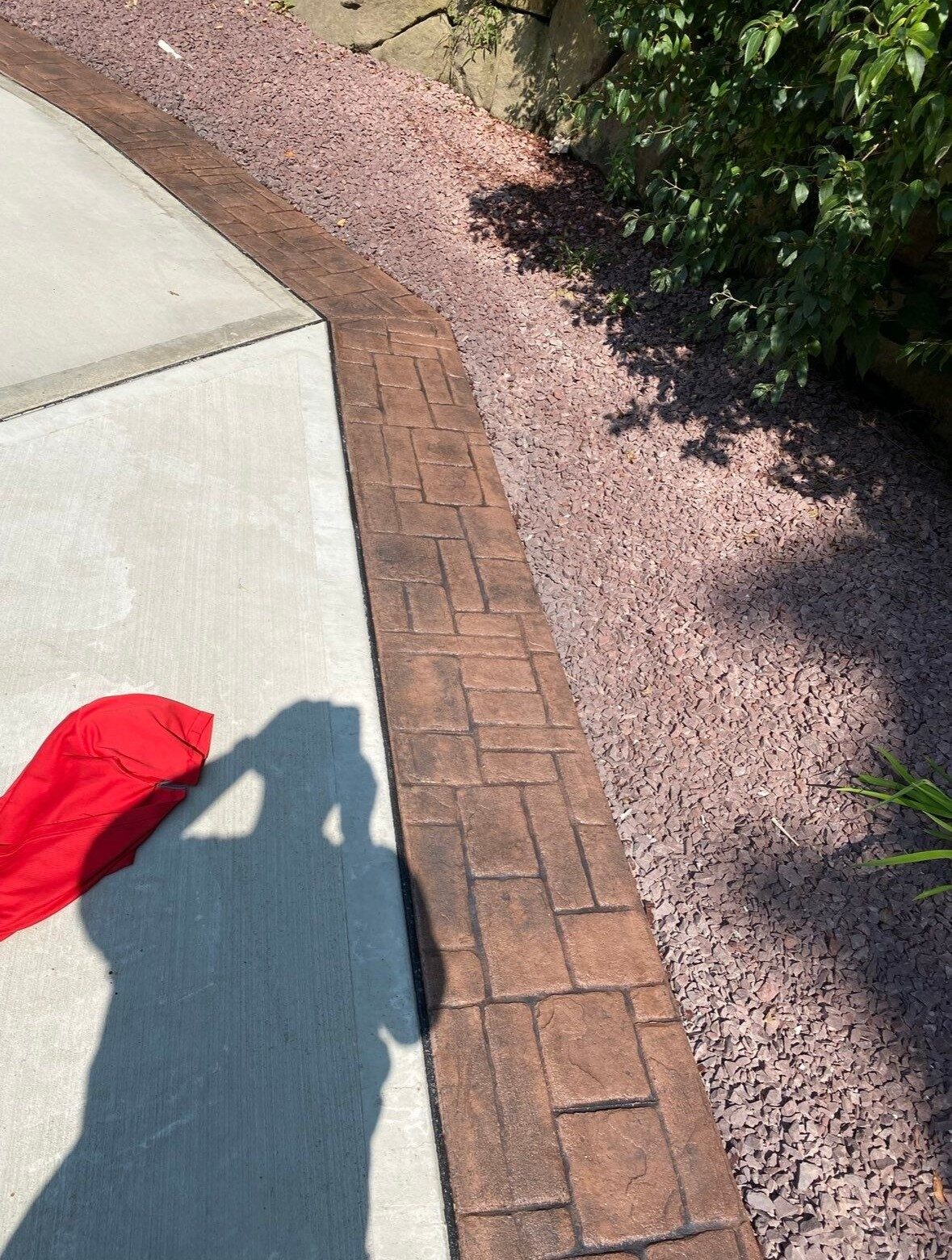
Most jobs pair a field pattern with a contrasting border. It defines the edge, breaks up a large area visually, and makes the whole slab read as intentional rather than plain.
Color: Integral, Broadcast, and Antiquing
There are three ways color gets into stamped concrete and they behave differently over time.
Integral color is pigment mixed into the concrete at the plant, so the color runs through the entire thickness of the slab. It costs the most and it is the most durable, because a surface chip exposes more of the same color rather than gray underneath.
Color hardener is broadcast onto the surface and worked in during finishing. It produces richer, more saturated color than integral and adds surface hardness, but it only lives in the top layer.
Antiquing release agent adds the secondary accent tone that settles into the low points of the texture. This is what keeps stamped concrete from looking like a single flat color and is a large part of why good stamped work reads as real stone.
We will walk you through samples. Color always looks different at full scale outdoors than it does on a small sample in a shop.
Stamped Overlay Versus a New Pour
If you have existing concrete that is structurally sound but plain or tired looking, a stamped overlay can go over top of it. A thin cementitious layer is bonded to the existing slab and stamped. It costs less than tearing out and repouring, and it is a legitimate option.
The condition it requires is a sound substrate. If the existing slab is cracked through, settling, spalling, or moving, an overlay will fail because it is only as stable as what is underneath it. Existing cracks reflect through an overlay within a season or two.
Dave will tell you straight which one your slab is a candidate for. We would rather do the smaller overlay job than sell an unnecessary tear out, and we would rather turn down an overlay than put nice work on top of a failing base.
Slip Resistance and Sealing
Sealed stamped concrete can get slick when wet. That is worth planning for rather than discovering.
For pool decks and any stamped surface that will be walked on barefoot or in the rain, we add a clear slip resistant additive to the sealer. It is a small cost that makes a real difference in traction, and it does not change the appearance.
Sealing is not optional maintenance on stamped concrete, it is the thing that keeps the color from fading and keeps water and salt out of the textured surface. Plan on resealing every two to three years in this climate. A stamped patio that gets resealed on schedule looks good for decades. One that never gets resealed after installation looks tired in five years, and people blame the concrete.
Maintaining Stamped Concrete Through Pennsylvania Winters
Two rules cover most of it.
No deicing salt on stamped concrete, ever, and especially not in the first winter. Chlorides attack the surface and the textured profile gives them more area to work on than a flat broom finish does. Use sand for traction. If you must clear ice, do it mechanically with a plastic edged shovel rather than chemically.
Reseal on schedule. When water stops beading on the surface, the sealer is spent. In Western PA that is typically two to three years depending on sun exposure and traffic.
Beyond that, rinse it, keep leaves from sitting on it wet through the fall, and it will hold up.
Stamped Concrete Versus Pavers
Both are good products and people ask about the comparison constantly.
Stamped concrete costs less per square foot installed, gives you a continuous surface with no joints for weeds or ants, and offers a wider range of patterns and colors including looks pavers cannot produce, like wood plank. Its downside is that a repair is a visible patch, since matching existing stamped work exactly is difficult.
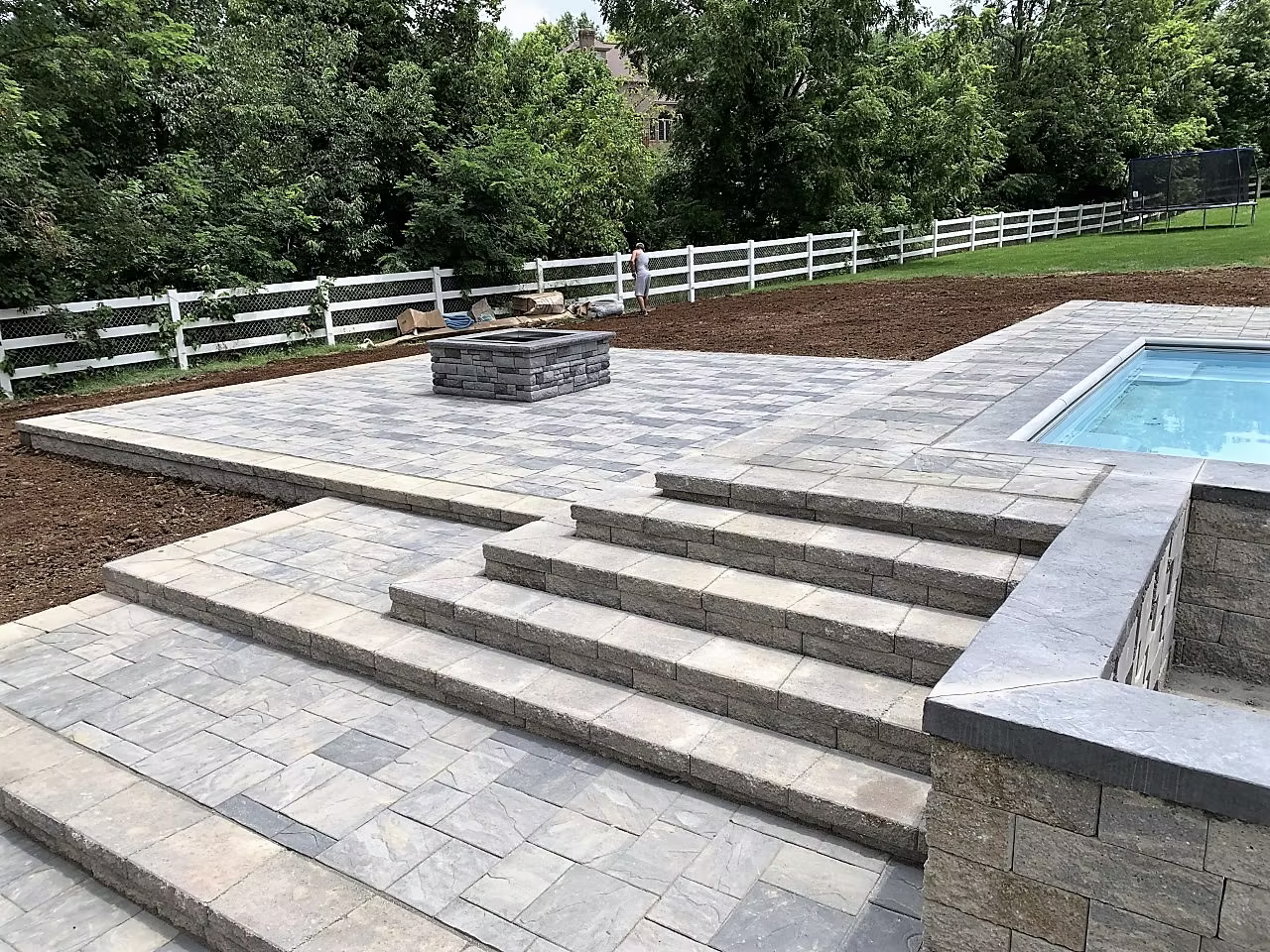
Pavers can be lifted and reset individually, which makes localized repair cleaner, and they will not crack because each unit moves independently. Their downside is joint maintenance, weed growth, settling over time, and higher installed cost.
For most residential patios and pool decks in Western PA, stamped concrete is the better value if you commit to resealing. We break the comparison down further in stamped concrete vs pavers in Pittsburgh winters.
What Stamped Concrete Costs
Stamped runs meaningfully above a broom finish per square foot because it adds material cost for color and release, significant labor for stamping, and sealing. Cost drivers are the pattern complexity, whether you use one pattern or a field plus border, integral versus broadcast color, total square footage, and site access.
Larger jobs price better per square foot than small ones because setup and mobilization spread across more area. If you are considering stamped work on both a patio and a driveway, pricing them together is worth doing.
Related Services
Areas We Serve
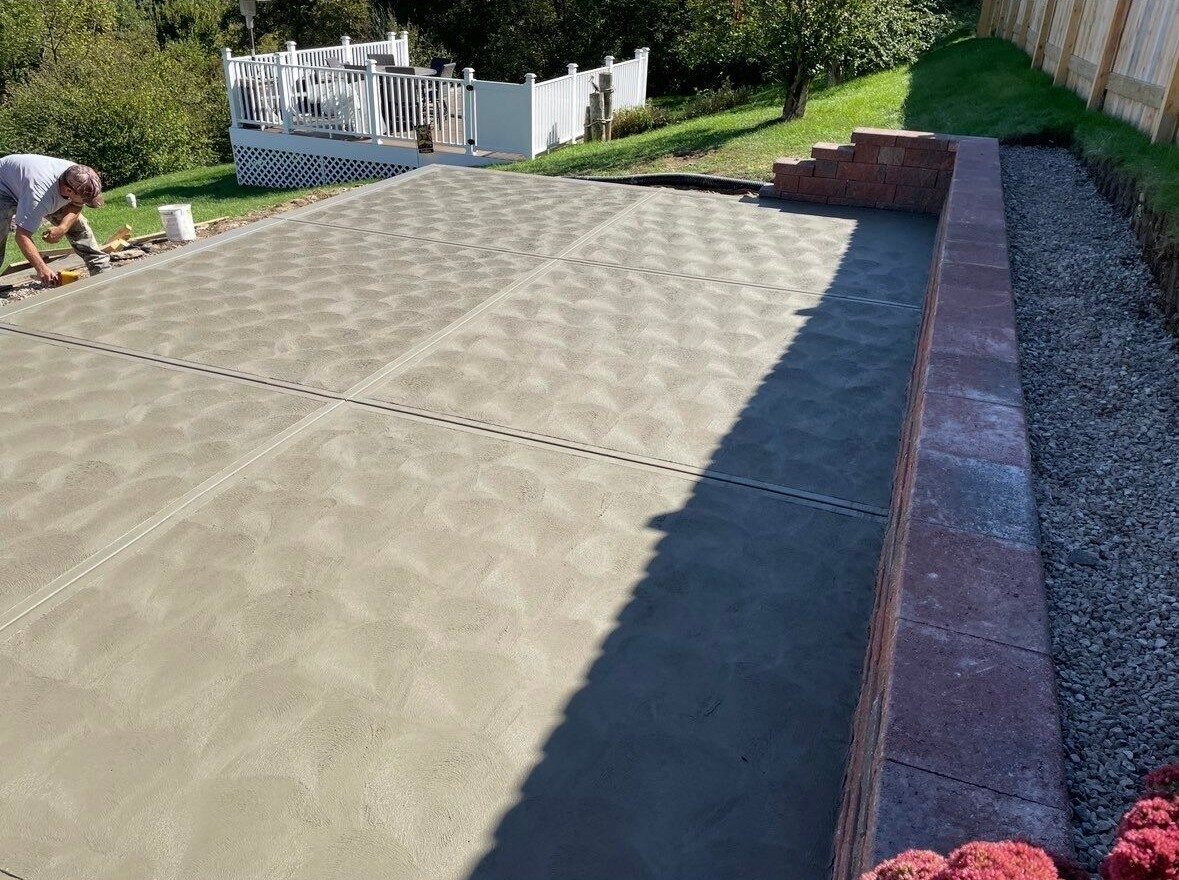
"Dave did a. Amazing back yard patio for us. The job site was maintained perfectly and all the employees kept the site clean each day before going home: Dave kept us involved in all the stages. Dave gave us creative control as we begun to waiver on our original color and placement and in the end we got exactly what we wanted. I would not only recommend ultimate concrete service, I would use them for anything we will ever need again. Thank you Dave for being so professional!"
Chris Porreca
Google Review
Frequently Asked Questions
Meaningfully more per square foot, driven by color materials, stamping labor, and sealing. The exact difference depends on pattern complexity, color method, and square footage, so Dave prices it during the on site estimate.
It can be when sealed and wet. For pool decks and any barefoot surface we add a clear slip resistant additive to the sealer. It changes the traction noticeably and does not change how it looks.
Every two to three years in Western Pennsylvania. When water stops beading on the surface, the sealer is spent. Resealing on schedule is the single biggest factor in how long stamped work keeps looking new.
Yes, if the existing slab is structurally sound. A stamped overlay bonds to it and costs less than a tear out. If the slab is cracked through, settling, or spalling, an overlay will fail because existing cracks reflect through it.
No. Deicing salts attack the surface, and the textured profile gives chlorides more area to work on than flat concrete. Use sand for traction and clear ice mechanically.
Ashlar slate, random stone and flagstone, running bond and herringbone brick, wood plank, cobblestone, and European fan, in a wide range of colors. Most jobs pair a field pattern with a contrasting border.