Concrete Repair and Resurfacing in Beaver, PA
Crack repair, resurfacing, and sealing for existing concrete.
Ultimate Concrete Service repairs and resurfaces concrete throughout Beaver County, Allegheny County, and the Greater Pittsburgh area. Not everything needs torn out, and we would rather do the smaller honest job than sell you a replacement you do not need. Dave Felouzis has been assessing failing concrete in Western Pennsylvania for more than twenty-five years and can usually tell within a few minutes on site whether you are looking at a repair or a rebuild. Getting that assessment right in either direction saves you money. Replacing salvageable concrete wastes it. Repairing concrete that is genuinely failing wastes it twice, because you pay again in two years.
What Can Be Repaired and What Cannot
The honest dividing line is whether the problem is at the surface or through the slab.
Generally repairable: surface spalling and scaling on otherwise sound concrete, isolated cracks with no vertical displacement, settled sections where the concrete itself is intact, worn or dated surfaces that are structurally fine, joint deterioration, and edge damage.
Generally not repairable: cracking distributed across the whole slab rather than in one area, sections displaced vertically so one side sits higher than the other, concrete broken into pieces that move independently under load, deterioration extending through the slab thickness, and any failure caused by a grade or drainage problem that has not been corrected.
That last one is the important one. If water is the cause, fixing the concrete without fixing the water buys you a couple of seasons at most.
Understanding Spalling and Scaling
Spalling and scaling are the flaking, pitting, chipping surface deterioration that shows up on so much Western Pennsylvania concrete, and the cause is nearly always the same combination.
Water penetrates the surface. It freezes and expands. It does that forty or fifty times a winter. Add deicing salt, which drives the chloride content up and accelerates the deterioration substantially, and you get a surface that starts shedding.
It is worse on concrete that was not air entrained, was overworked or over watered during finishing, was sealed too late or never, or was hit with salt in its first winter before it fully cured.
Surface spalling on a structurally sound slab is a good candidate for resurfacing. Spalling that has progressed deep enough to expose reinforcement is a different situation and usually means replacement.
Crack Repair Methods
The right method depends on the crack.
Hairline cracks in a sound slab are usually cosmetic and often the best action is sealing them to keep water out rather than trying to make them invisible. Wider static cracks can be routed and filled with a flexible sealant that moves with the slab, which matters more than color matching does. Cracks that are actively moving or displacing indicate something structural underneath, and filling them repeatedly without addressing the cause is money spent on a symptom.
Nobody makes a crack disappear. Anyone promising an invisible repair on exterior concrete is overselling. The realistic goals are keeping water out, stopping the crack from widening, and improving the appearance.
Slab Lifting for Settled Concrete
When a section of walkway, patio, driveway, or garage floor has settled but the concrete itself is intact and unbroken, lifting is often a legitimate option at a fraction of replacement cost.
Void space beneath the slab is filled and the slab is raised back to grade. It is fast, the surface stays usable quickly, and there is minimal disruption to surrounding landscaping.
It works when the concrete is sound and the settlement is caused by a void or by consolidation that has largely finished. It does not work when the slab is broken through, when the surface is deteriorating anyway, or when the ground beneath is genuinely unstable and will keep moving. In that last case you are buying a season or two.
We will tell you which situation you have. For settled front walks specifically, see sidewalks and steps, since those are usually a drainage problem rather than a concrete problem.
Resurfacing and Overlays
Resurfacing bonds a new cementitious layer to existing concrete, giving you a fresh surface without a tear out.
It is a strong option for a plain gray patio you want stamped, a pool deck that has faded, a garage floor with a worn surface, or a commercial walkway that looks tired. The new layer can be textured, colored, and stamped, so the finished result can look like new decorative work at meaningfully less cost. Our stamped and decorative concrete page covers the finish options.
The requirement, again, is a sound substrate. An overlay is only as stable as the slab it is bonded to. Existing cracks reflect through, existing settlement continues, and existing spalling means the bonding surface is compromised. We check for all three before recommending it.
Sealing as Preventive Maintenance
The cheapest concrete work you will ever buy is the sealing that prevents the repair.
Sealer keeps water and chloride out of the surface, which is the entire mechanism behind freeze thaw damage and salt scaling. On decorative and stamped surfaces it also preserves color. In this climate, plan on resealing every two to three years, and check by seeing whether water still beads on the surface.
Two other habits matter as much. Keep deicing salt off concrete entirely during its first winter and use it sparingly after that, with sand as the better traction option. And keep drainage moving water away from slabs rather than allowing it to pool along edges and joints.
What Repair Costs Versus Replacement
Repair almost always costs less than replacement in the moment. The question worth asking is cost per year of remaining service life.
Resurfacing a sound slab that has fifteen years left in it is excellent value. Resurfacing a slab that is going to need replaced in three years regardless is not, because you pay for the overlay and then pay for the replacement anyway.
Dave will give you the honest version, including when the honest version is that the repair is not worth doing. If you are weighing a repair against replacing a driveway outright, our signs your driveway needs replaced post walks through the specific indicators.
Related Services
Areas We Serve
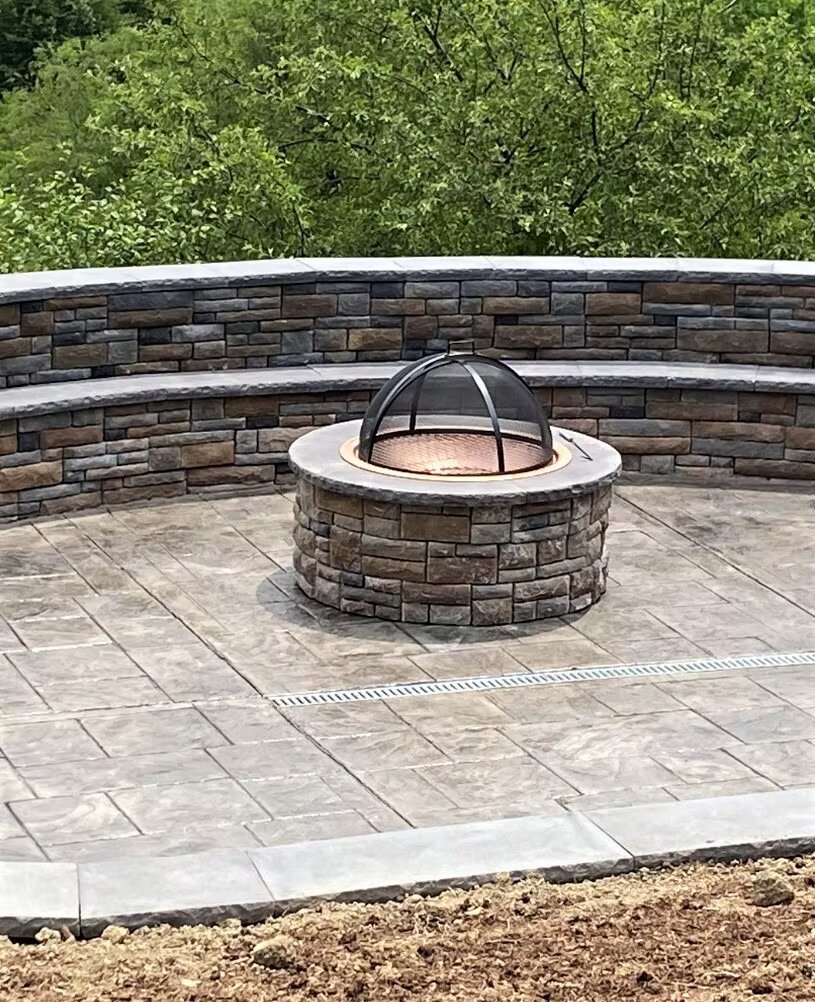
"We received 4 quotes on our backyard porch project and Dave did the best at providing a detailed quote and made us feel comfortable that we were aligned on the project. It was not just pouring concrete and involved masonary work and custom iron railing work. The concrete work is fantastic - a thick slab with rebar the drains well! We are spending more time on our back porch than we ever have before. Thanks Dave and team!"
Lisa George
Google Review
Frequently Asked Questions
That is spalling or scaling, and it is caused by water penetrating the surface, freezing, and expanding, accelerated substantially by deicing salt. It is worse on concrete that was not air entrained or that was salted during its first winter.
No, and nobody can on exterior concrete. What we can do is keep water out of it, stop it from widening, and improve the appearance. Anyone promising an invisible repair is overselling.
Repair costs less up front, but the right question is cost per year of remaining life. Resurfacing a sound slab with fifteen good years left is excellent value. Resurfacing one that needs replaced in three years means paying twice.
If the concrete itself is sound and unbroken, often yes, and it costs far less than replacement. If it is cracked through or the ground beneath is still moving, lifting buys a season or two rather than solving it.
Yes, if the existing slab is structurally sound. A stamped overlay bonds to it and can be textured and colored. Existing cracks and settlement will reflect through an overlay, so we check the substrate first.
Every two to three years in Western Pennsylvania. Check by seeing whether water still beads on the surface. Sealing is the cheapest concrete work you will ever buy, because it prevents the repair.