Concrete Sidewalks and Steps in Beaver, PA
Walkways, stairs, landings, and ADA ramps poured to code.
Ultimate Concrete Service builds and replaces concrete sidewalks, front steps, landings, porches, stoops, and accessibility ramps across Beaver County and the Pittsburgh area. These are smaller jobs than a driveway, and they are the ones that create the most liability when they are done badly. A settled walkway or an uneven step is a trip hazard on the exact path every visitor to your property walks. Dave Felouzis has been pouring flatwork and steps in Western PA for over twenty-five years and treats the small jobs with the same prep standards as the large ones.
Why Sidewalks and Steps Fail First
Walkways and steps are usually the earliest concrete on a property to go bad, and it is not because they were built worse than the driveway. It is because of where they sit.
A front walk runs right along the foundation, which is where water concentrates coming off the roof and out of downspouts. Steps sit at a transition between structures, so they are fighting differential settlement from day one: the house is on a footer that does not move, the ground beside it is not. Add a thin pour, shallow prep, and a downspout dumping directly beside it, and you get the classic Western PA front walk that has dropped an inch and a half away from the porch.
Fixing that permanently means addressing the water first. We look at where your downspouts discharge before we look at the concrete.
Rise, Run, and Safe Step Geometry
Steps have to be consistent to be safe. People climb stairs by feel after the first tread, and a single step with a rise a half inch different from the others is what actually causes falls. This matters more than most homeowners realize and it is one of the most common defects we find in DIY and low bid step work.
Rise should stay uniform across the flight, tread depth should be adequate for a full foot placement, and every tread should pitch slightly forward so water sheds instead of freezing in a puddle at the back of the step. On exterior steps in this climate that forward pitch is not a detail, it is the difference between a safe stair and a sheet of ice every January.
We form steps rather than stacking precast units, which lets us match the rise to your existing grade and door threshold instead of forcing the grade to match a stock unit.
Municipal Sidewalk Requirements Around Pittsburgh
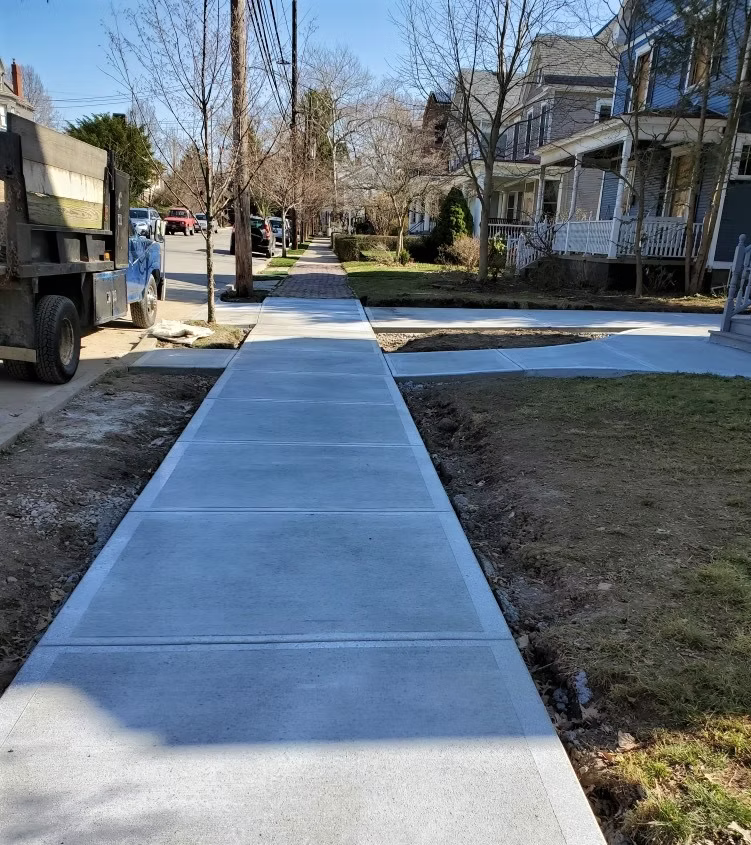
Many boroughs and townships across Allegheny and Beaver County place responsibility for the public sidewalk on the adjacent property owner, and several run periodic inspection programs that issue repair notices. Requirements vary by municipality on width, thickness, joint spacing, and whether a permit is needed for replacement in the right of way.
If you have received a notice from your borough, bring it to the estimate. We will build to what the notice specifies. If you are in an older Pittsburgh neighborhood with brick or flagstone walks in the right of way, there may be additional restrictions worth checking before anything comes out.
ADA and Handicap Ramps
We build concrete accessibility ramps for both residential and commercial properties. On the residential side this is usually about keeping someone in their home, and the timeline tends to be urgent. On the commercial side it is a compliance requirement with defined specifications for slope, width, landing dimensions, and handrail provisions.
Slope is the item that gets missed most often. A ramp that is too steep is not just non compliant, it is unusable by the person it was built for. That constraint often determines the ramp's total length and where it can physically go on the property, so we work that out during the estimate rather than discovering it mid pour. For commercial accessibility work, see our commercial and industrial concrete page.
Landings, Porches, and Stoops
A landing is the platform at the top of a run of steps, and it takes more abuse than the steps themselves because it holds standing water, catches everything coming off the roof line, and gets the heaviest foot traffic on the property.
We pour landings with positive slope away from the door threshold, adequate thickness for the span, and a finish that stays grippy when wet. Where a landing meets the house, the joint detail matters: it needs to allow independent movement between the slab and the foundation without opening a channel for water into the basement.
Front porches and stoops follow the same rules. If yours has separated from the house, cracked through, or dropped at the outer edge, that is a structural issue rather than a cosmetic one.
Lifting Versus Replacing a Sunken Walkway
If a walkway section has settled but the concrete itself is intact and unbroken, lifting is sometimes an option and it costs less than replacement. If the slab is cracked through, spalled across the surface, or has settled because the ground beneath it is genuinely unstable, lifting buys you a season or two before the same thing happens again.
We will give you an honest read on which one you are looking at. Sometimes the right answer is replacing two bad sections of a walk and leaving the other six alone. See concrete repair and resurfacing for what is possible short of a full tear out.
What Sidewalk and Step Work Costs
Flatwork is priced on square footage, and steps are priced by the flight based on rise count, width, and how much forming the geometry requires. Demolition and haul off of existing concrete, excavation depth, handrail provisions, and access all move the number.
Steps cost meaningfully more per square foot than flat walkway because of the forming labor. That is normal and any honest estimate will reflect it.
The practical advice: if you are already planning driveway work or a patio, bundle the walkway and steps into the same job. Mobilizing equipment, forms, and a crew once instead of twice is where you actually save money.
Related Services
Areas We Serve
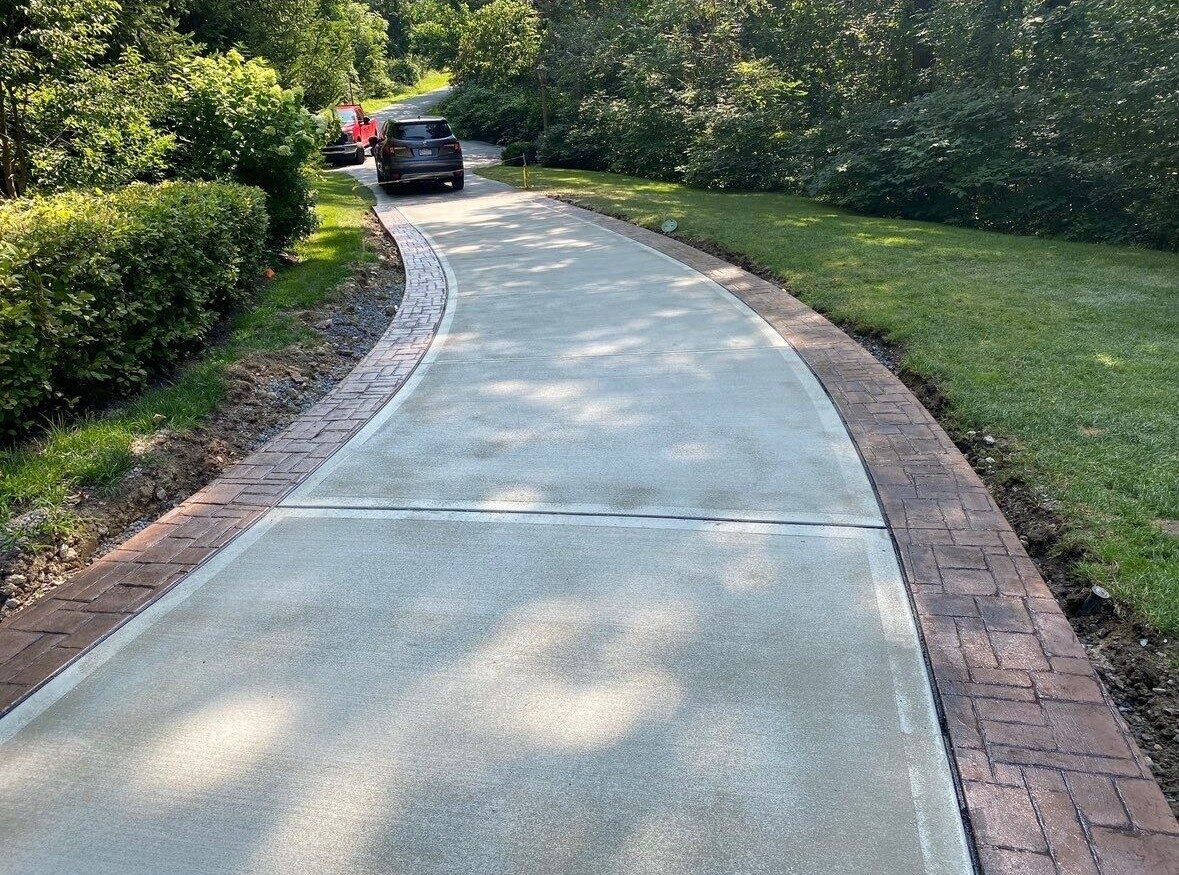
"We are currently renovating a home, and Ultimate Concrete Service has been one of the highlights of the process. From start to finish, they impressed us. We called and, within days, our new walkway was being poured. The finishing touches came from a gentleman with over 30 years of experience, and it shows! Our front walkway is stunning and has completely transformed the look of our home. We couldn't be happier!"
Corrine Smith
Google Review
Frequently Asked Questions
Almost always differential settlement combined with water. The house sits on a footer that does not move, the soil beside it does, and downspout discharge accelerates it. Fixing it permanently means correcting the drainage, not just repouring the steps.
In many Allegheny and Beaver County municipalities, yes. Requirements differ by borough and township. If you have received a repair notice, bring it to the estimate and we will build to its specifications.
We can get close on texture and joint pattern, but exact color matching is not realistic. New concrete cures lighter and will not match aged concrete beside it. That difference narrows over a few years but never disappears entirely.
Yes, for both homes and commercial properties. Slope requirements usually determine how long the ramp has to be and where it can go, so we work that out during the estimate.
Seven days for normal foot traffic. Keep pets off as well, since paw prints set permanently in the first day.
We form and pour the concrete, including any required footers or embedded anchors for railings. Tell us at the estimate so the anchor points go in during the pour rather than being drilled later.