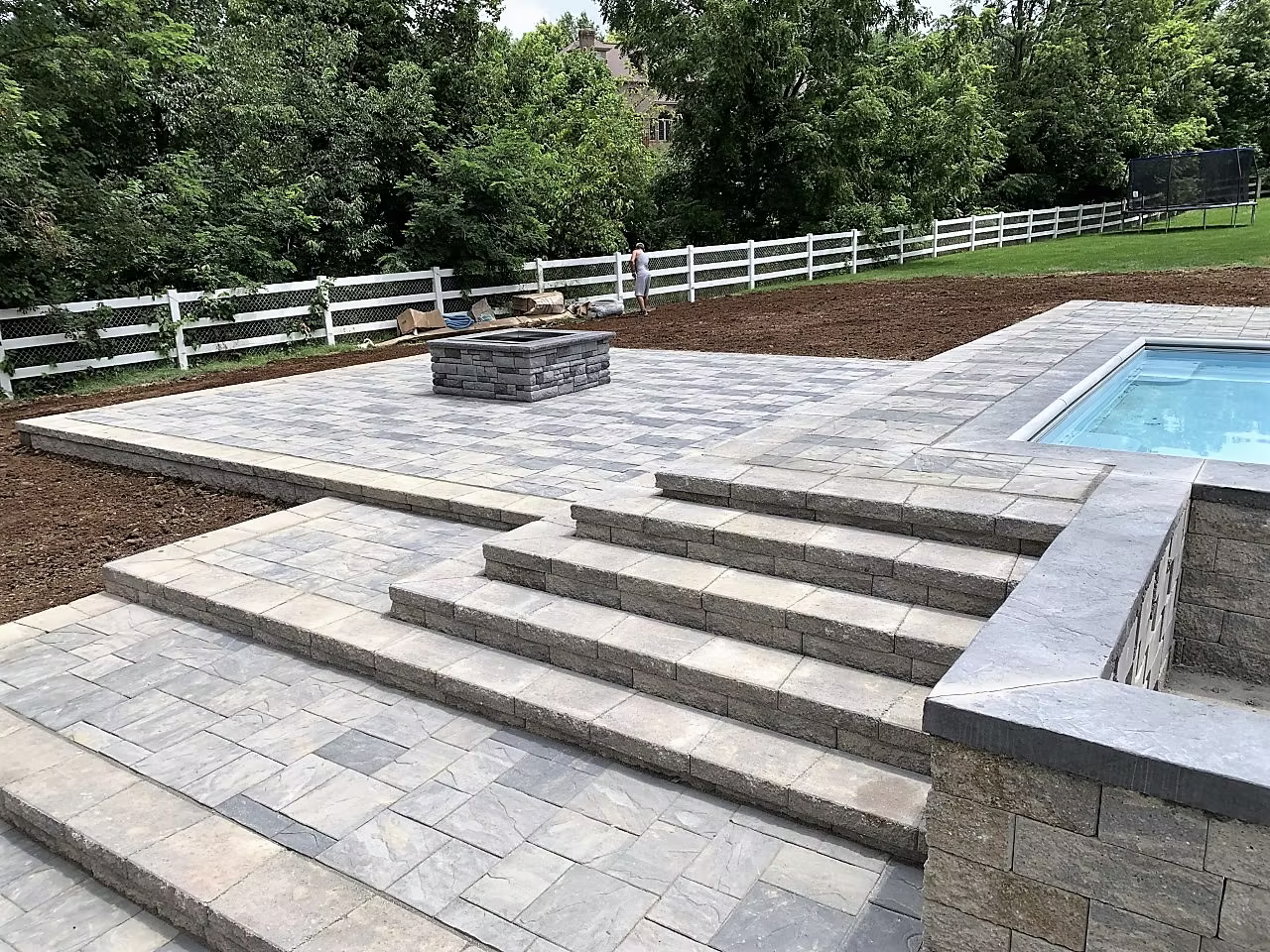
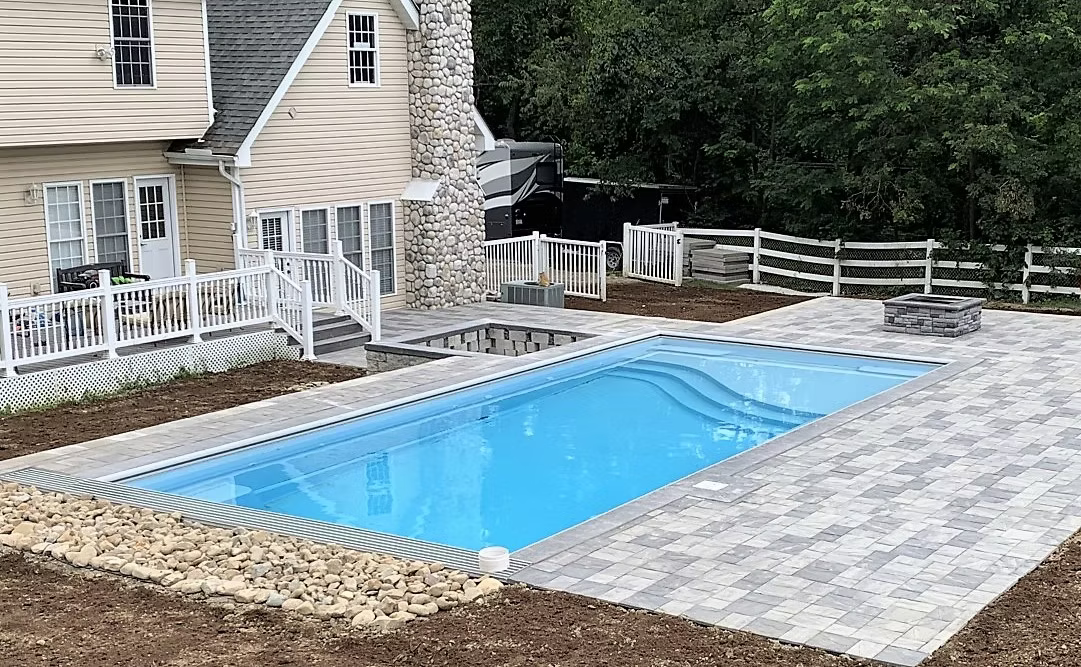
Concrete Pool Decks in Pittsburgh, PA
Slip-resistant broom, stamped, and textured pool surrounds.
Ultimate Concrete Service builds and resurfaces concrete pool decks across Beaver County, Allegheny County, and the Greater Pittsburgh area. A pool deck is the hardest working decorative concrete on any property. It is walked on barefoot, it is wet most of the time it is in use, it takes direct sun all summer, it gets splashed with chlorinated or salinated water, and then it sits through a Western Pennsylvania winter. Dave Felouzis has been building them for over twenty-five years, and the difference between a deck that still looks good at year fifteen and one that is chalky and cracked at year six comes down to choices made before the pour.
What a Pool Deck Has to Survive
Everything that makes a pool deck pleasant to use also makes it hard on concrete.
Constant wetting and drying cycles drive water into the surface. Pool chemistry, whether traditional chlorine or a salt system, is chemically aggressive to cement paste over time. Sun exposure fades color and degrades sealer faster than shade does. And then the deck sits through roughly forty to fifty freeze and thaw cycles here, with whatever water it absorbed during the season still in it.
Pool decks also sit on ground that was recently excavated for the pool itself, which means the soil around them is disturbed backfill rather than undisturbed native ground. That backfill settles. A deck poured on poorly compacted pool backfill will crack and drop at the edges, and it is one of the most common failures we get called about.
Our answer is proper compaction of that backfill before anything is formed, adequate slab thickness, air entrained mix, and reinforcement sized to the span.
Slip Resistance Comes First
This is the one decision on a pool deck that is not about looks.
Wet feet on a smooth sealed surface at the edge of a pool is exactly the scenario that produces injuries. Any finish we put on a pool deck has to hold traction when soaked.
Broom finish gives traction naturally through its texture. Exposed aggregate gives excellent grip through the exposed stone. Stamped finishes look the best and need help: we add a clear slip resistant additive into the sealer, which changes traction meaningfully without changing appearance. Smooth trowel finishes have no place around a pool and we will tell you that if you ask for one.
If children or older adults will use the pool regularly, weight this decision harder than the aesthetics. Our stamped and decorative concrete page covers how the additive works with each finish type.
Heat and Barefoot Comfort
Surface temperature is the thing homeowners forget until August.
Dark colored concrete absorbs significantly more solar heat than light colored concrete, and the difference underfoot on a hot afternoon is not subtle. A deep charcoal stamped deck can become genuinely uncomfortable to cross barefoot in midsummer, and that is a permanent property of the deck you just paid for.
Lighter tans, buffs, grays, and sand tones stay noticeably cooler. If you want a dark dramatic look, one workable compromise is a lighter field with darker accent borders, so the surface people actually walk across stays cool while the design still reads as intentional. We will show you samples and tell you honestly which ones will be hot.
Deck Layout, Coping, and the Water's Edge
How the deck meets the pool matters both structurally and visually.
The coping is the cap at the pool edge, and the joint between coping and deck has to be a properly detailed expansion joint. The deck and the pool shell are separate structures that move independently. If they are poured tight against each other with no expansion provision, one will crack. That joint also needs to stay sealed so water does not get behind the coping.
Deck width around the pool is worth planning deliberately. A narrow strip on all four sides looks tight and gives you nowhere to put anything. Most people are better served by a modest walking width on three sides and a genuinely generous area on the side where furniture, loungers, and a table will actually live.
Slope runs away from the pool, not toward it, so deck water and rain do not carry debris into the water.
Resurfacing an Existing Pool Deck
If your pool deck is structurally sound but looks tired, faded, or dated, resurfacing is often the right call and costs substantially less than tearing it out.
A cementitious overlay bonds to the existing slab and can be finished with texture, color, and even stamping. It is a genuine option for a deck that was poured plain gray twenty years ago and now needs to match a renovated backyard.
The requirement is a sound substrate. If the existing deck has settled at the edges, cracked through, or is spalling across the surface, an overlay is putting good work on a failing base and the existing cracks will reflect through it within a season or two. We will give you a straight read on which situation you are in. See concrete repair and resurfacing for the full picture on what is fixable.
Chlorine, Salt Systems, and Sealing
Saltwater pool systems have become common, and they are harder on concrete than traditional chlorine.
Salt is aggressive to cement paste and to any embedded steel reinforcement it reaches. If you run a salt system, sealing is not a cosmetic choice, it is the barrier keeping saline splash out of the slab. Tell us at the estimate which system you have so we specify the appropriate sealer.
Plan on resealing every two to three years in this climate, and sooner on a heavily used deck in full sun. When water stops beading, the sealer is done. Do not use deicing salt on a pool deck in winter under any circumstances, since you would be adding chloride exposure to a surface already fighting it all summer.
Pool Deck Cost Factors
Square footage sets the base, and from there the drivers are finish type, color method, whether the pool backfill needs additional compaction or fill, drainage requirements, expansion joint detail at the coping, sealing, and access.
Access is a large factor on pool projects specifically. Pools are usually in back yards, often behind fencing and landscaping, sometimes on grade. A back yard the truck can reach costs materially less to pour than one where every yard of concrete moves by buggy or wheelbarrow.
If you are building the pool and the deck at the same time, coordinate the schedule with us early. There is a right sequence, and doing it out of order costs money. For a fuller breakdown, read our concrete pool deck guide.
Related Services
Areas We Serve
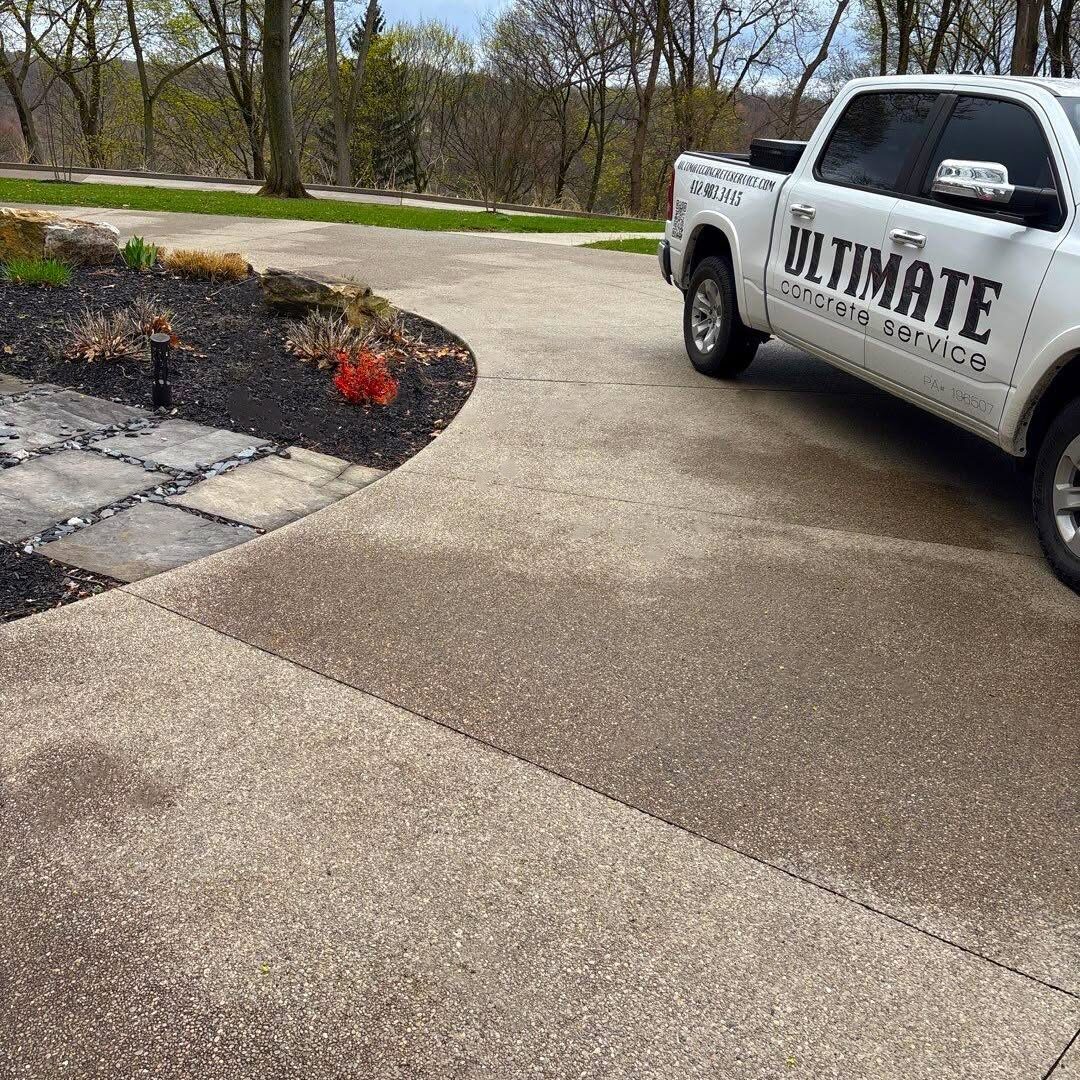
"Dave's price was on point and so was the end product. Also, he and his team came when they said they were going to and finished on time. That is rare these days. Highly recommend."
Michael J. Moran
Google Review
Frequently Asked Questions
Yes, when it is sealed with a clear slip resistant additive. Sealed stamped concrete without that additive gets slick when wet, which is not acceptable at a pool edge. We add it as a standard part of any pool deck we seal.
Dark colors absorb far more heat than light ones and the difference underfoot in August is significant. Lighter tans, buffs, and grays stay noticeably cooler. If you want a dark look, a light field with dark accent borders is the usual compromise.
If the existing slab is structurally sound, yes, and it costs considerably less than a tear out. If it has settled, cracked through, or is spalling, an overlay will fail because those defects reflect through it.
Salt is more aggressive to concrete than traditional chlorine. It does not rule out a concrete deck, it means sealing matters more and needs to stay on schedule. Tell us your system at the estimate so we specify the right sealer.
It depends on how you use it. A modest walking width on three sides with a genuinely generous area on the furniture side works better for most families than an even narrow strip all the way around.
Every two to three years in Western Pennsylvania, and sooner for a heavily used deck in full sun. When water stops beading on the surface, the sealer is spent.